Why SSD and GPU Prices Are Rising Again in 2025
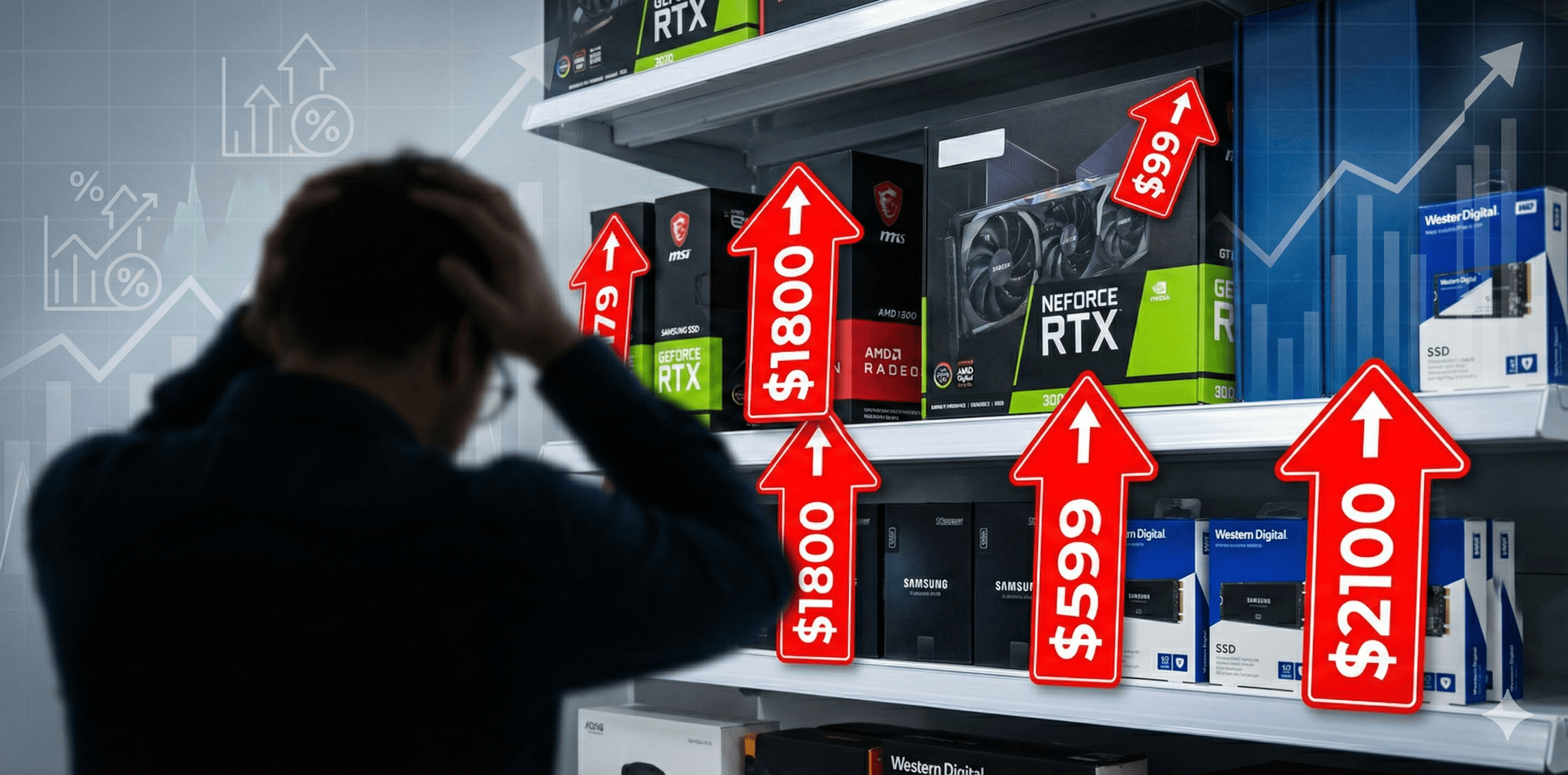
The tech hardware market is experiencing another wave of price increases that's hitting consumers hard. Whether you're planning to upgrade your PC or buy a new graphics card, the higher price tags are impossible to ignore. The rise in SSD and GPU costs isn't random. It's the result of several major global factors converging at once.
The Memory Shortage Crisis
One of the biggest drivers is the shortage of memory components. DRAM chip spot prices rose over 7% in early November 2025, while NAND wafers surged by more than 17%. Contract prices have climbed 15-20% in Q4 2025, with DRAM showing a staggering 171.8% year-over-year increase.
Major manufacturers like Samsung and SK Hynix have strategically shifted production focus. They've reduced output of older memory types (legacy NAND and DDR3/DDR4 DRAM) while repurposing equipment for newer generations. This modernization has reduced overall supply available for consumer products.
AI Demand Reshapes the Market
The explosive growth of artificial intelligence has dramatically changed the landscape. AI servers and data centers require massive amounts of high-performance memory. Hyperscalers are absorbing enormous quantities, leaving fewer chips for consumer products.
Chipmakers have shifted significant capacity toward high-bandwidth memory (HBM), which is extremely profitable and essential for AI accelerators. HBM supply from SK Hynix and Micron has been completely sold out for 2024 and most of 2025. Samsung has ramped up production of high-density DDR5 and HBM3E specifically for AI applications. The result: less manufacturing capacity for standard memory in consumer SSDs and graphics cards.
GPU Price Increases
Graphics card pricing is being directly affected by these market conditions. AMD has notified its supply chain of a roughly 10% price increase across its entire GPU lineup. Reports suggest NVIDIA might implement similar increases in Q1 2026 due to rising DRAM costs, though their strong profit margins may provide pricing flexibility.
Beyond memory costs, newer graphics cards require sophisticated cooling, advanced fabrication nodes, and larger amounts of VRAM. As manufacturing complexity increases, companies must balance rising costs with competitive pricing. When manufacturers raise official MSRPs, retailers add their markups, pushing consumer prices even higher.
Additional Cost Pressures
Global logistics challenges add further financial pressure. Transportation costs, electricity rates for chip fabrication, and raw material prices have all increased. Since chip fabrication is energy-intensive, rising operational expenses ultimately appear in hardware prices.
A Prolonged Crisis Ahead
The combination of limited supply and surging demand creates a classic market imbalance. When fewer memory chips are available and multiple industries compete for them, prices rise. For consumers, this means previously affordable SSDs and GPUs now sell at premiums, with even entry-level hardware experiencing significant price jumps.
The outlook is grim. Industry analysts describe this as unprecedented, with HDD, DRAM, HBM, and NAND all heading into severe shortage during 2026. Building new fabrication facilities takes years, and AI demand continues growing. Until supply catches up—likely well beyond 2026—SSD and GPU prices will remain elevated.
What Consumers Should Do
For consumers, the best strategy is to carefully assess your needs and buy when necessary. Those hoping for significant price drops may be waiting a long time, as the fundamental supply-demand imbalance shows no signs of quick resolution. If you're planning a build or upgrade, acting sooner rather than later may be wise. Prices could continue climbing through 2025 and into 2026.
The Bottom Line: Rising memory costs, AI-driven demand, production shifts toward newer technologies, and global logistics pressures are converging to push hardware prices upward. With industry analysts predicting severe shortages extending well into 2026 and beyond, consumers should expect elevated prices for the foreseeable future and plan their purchases accordingly.
Related Posts

 The $500 Lie: Why Your Instagram Feed is Now a Ticking Debt Bomb
December 4, 2025
 Why India Can't Afford to Miss the AI Race
November 13, 2025